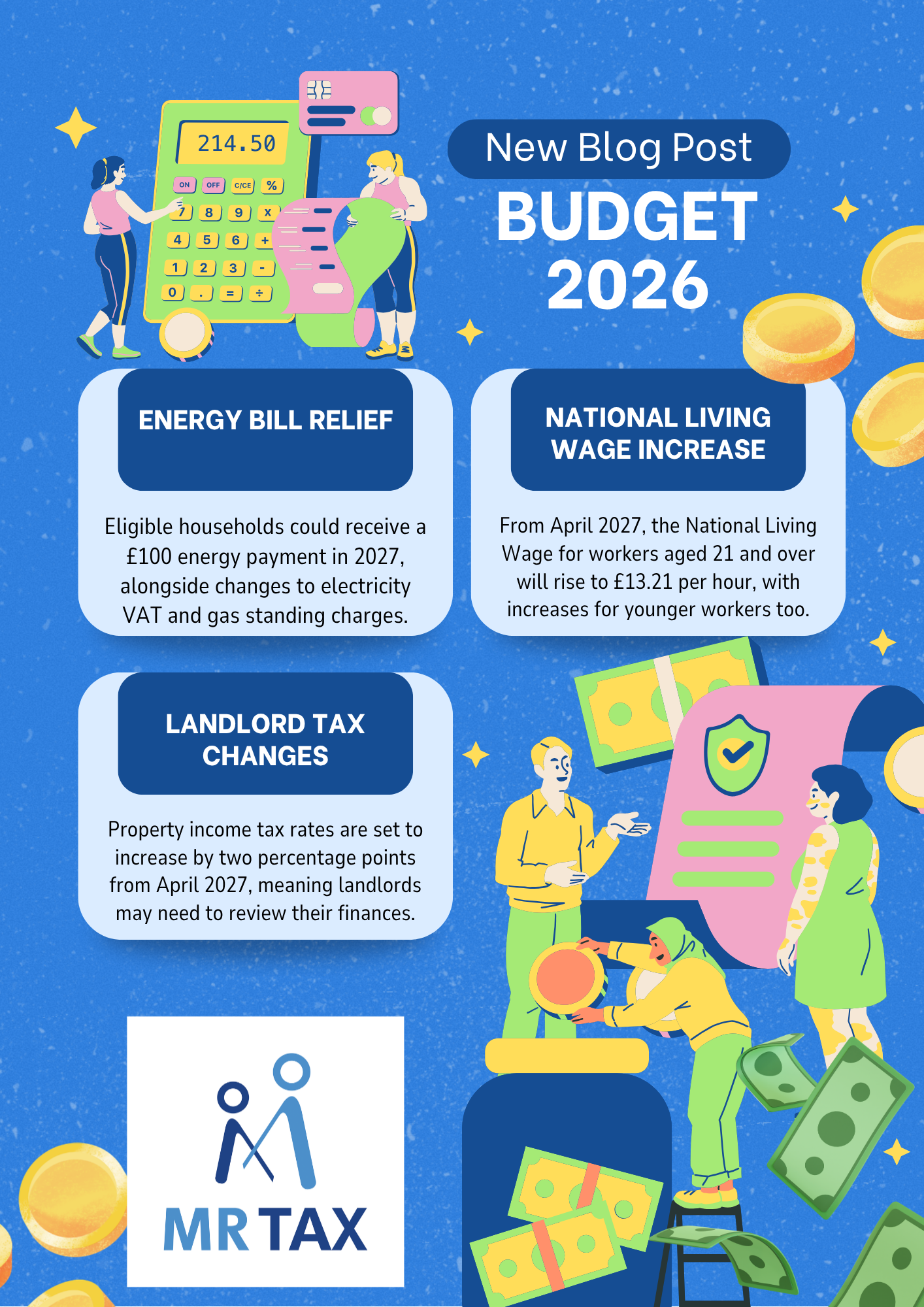
The Autumn Budget has been announced, bringing a number of changes that could affect households, workers, savers, landlords and businesses across the UK.
With measures covering everything from energy bills and wages to property income and business rates, there is plenty to take note of. While some changes will come into effect relatively soon, others are not due to be introduced until 2027 or later.
We’ve highlighted some of the key announcements and what they could mean for you.
Energy Bills
There is some welcome news for households facing rising energy costs. Eligible households in England living in council tax bands A–D are due to receive a £100 Household Energy Payment from January 2027. The temporary VAT reduction on electricity has also been extended until July 2027, while the Government plans to remove standing charges from domestic gas bills from 2027.
National Living Wage
From April 2027, the National Living Wage for workers aged 21 and over will increase to £13.21 per hour. The National Minimum Wage for 18–20-year-olds will also rise to £11.27 per hour. These increases will be important for both employees and employers when planning future wages and payroll costs.
Tax Allowances and Additional Income
One positive change for those earning money outside their main employment is the increase in the Trading Allowance from £1,000 to £3,000 from April 2027. This means individuals will be able to earn up to £3,000 in qualifying trading and miscellaneous income tax-free each year.
Savings and ISAs
The planned reduction to the Cash ISA allowance has been scrapped, meaning the annual tax-free allowance will remain at £20,000. However, tax rates on savings income are set to increase by two percentage points from April 2027, making it worth reviewing how your savings are structured.
Landlords and Property Income
Landlords should pay particular attention to changes affecting property income. Income tax rates on rental profits will increase by a further two percentage points from April 2027. This could have an impact on the amount of tax landlords pay, making forward planning and reviewing your finances increasingly important.
Fuel Duty
The existing 5p cut in fuel duty is being extended until 1 July 2027, offering some continued relief for motorists and businesses that rely on vehicles.
Business Rates
Eligible retail, hospitality and leisure businesses in England will benefit from changes to business rates. The Small Business Rate Relief thresholds are increasing to £18,000 for full relief and £21,000 for tapered relief from April 2027. Further measures will also help limit increases to business rates bills over the following two years.
Carer’s Allowance
From 2030/31, changes to Carer’s Allowance will mean that people will no longer lose their entire benefit if their earnings exceed the weekly limit by just £1. Instead, payments will gradually reduce as earnings increase.
What Does the Budget Mean for You?
As with any Budget, not every announcement will affect everyone in the same way. Your circumstances, income and business arrangements will all play a part in determining which changes are relevant to you.
At Mr Tax, we’ll continue to keep you informed about the latest tax developments and what they could mean for you, your family and your business.
If you have questions about how the Autumn Budget could affect your tax position, please get in touch with our friendly team. We’re always happy to help.